
February marks the beginning of the lunar new year, and this year we welcome the Year of the Horse. Called Seollal in Korea, many Korean people visit their families and perform ancestral rites. They wear traditional hanbok and feast on customary new year’s food like tteokguk, which is a soup of rice cakes in beef broth garnished with thinly slice egg, green onion, and meat. Old-style games like yut may be played, a board game using a set of special sticks.
People sometimes ask me what my family does to celebrate the lunar new year. We celebrate on January 1, as that is when all my family members are home and can usually pay respect to our elders. Before both my grandmothers passed away, our extended families gathered and bowed to them in the morning and ate tteokguk for breakfast. But we didn’t wear hanboks since none of us really owned one, and children favored modern board games while adults preferred talking.
These days we usually gather only with our immediate families and bow to the eldest members. My children bow to my parents first, chanting the phrase “sae hae bok mani badeuseyo,” which means “Please receive good blessings for the New Year.” They get on their hands and knees and almost touch their heads to the ground, as a gesture of deep respect. Even Joey gets involved!


In return, my parents offer their hopes to the younger generation for the new year, such as “study hard,” “find a good job,” or “listen to your parents.” They also give “saebae don,” or a small wad of cash, to help ensure these hopes come true.
My husband and I then bow to my parents. We chant the same phrase, and my parents would say something like “have patience with each other” or “be gentle with your children.” No money changes hands once one gets married, as we are expected to be full-fledged adults and support each other!
Then it’s our children’s turn to bow to us. After they wish us good fortune, we offer some wise words in return, for example, “stay healthy,” or “find someone you love.” Again, we offer them a nominal envelope of cash as a token of our trust in them.
My husband lovingly calls this “bowing for dollars.” It’s still a wonderful tradition, and we all enjoy doing it once a year when everyone is gathered for the holidays.
Family Conversations
Speaking of family, an amazing non-profit organization called Korean American Story conducted interviews of my parents for its Legacy Project last year and the videos are finally available! My father talked about his childhood in Japan, his migration to Manchuria during WWII, and attending a communist school in North Korea before escaping to South Korea through the mountains. Watch my father’s interview.
My mother spoke about living in Pyongyang before the country was separated, her family’s odyssey fleeing to the south by sea, and her harrowing escape from Seoul during the Korean War as she retreated from the encroaching Chinese army. Watch my mother’s interview.

Although I had heard my parents’ stories before, listening to them through these interviews allowed me to discover nuances and details I never knew before. I was grateful that my parents agreed to participate in the interviews, share milestone photos and personal documents, and speak openly about their painful experiences so their stories wouldn’t be lost.
I also had the opportunity to interview my parents as part of the Korean American Story Letters to My Hometown project. I never dreamed I would have the opportunity to interview my parents on film. My grandmother’s interviews for WHITE MULBERRY were conducted on a cassette recorder and a small audio recording machine. This was a whole different affair!

What struck me was that my parents were both living in North Korea as children around the same time, though in different cities and circumstances. They were both about the same age when they fled North Korea that I was when I immigrated to the US at seven. During the interview, I told them how conflicted I felt as a little girl coming to a new country unable to speak the language, and my regret at losing my ability to communicate in Korean, especially with them, as I lost my Korean over time.
How does migration impact family bonds and intergenerational relationships? How do the experiences of elders with direct memories of war affect the younger generations who inherit the legacies of their family’s past?
These are the questions I ask in my novel RED SEAL. Displacement requires each of us to cope with the challenges that migration presents in our respective lives and with each other. The revelation that my parents were refugees, and I was an immigrant when we were all young children made me feel a deeper connection to them. I developed a greater understanding of what others who experienced similar hardships must have endured. These memories should be preserved, and I’m grateful that I was able to explore these questions by writing my family’s story.
Progress on RED SEAL
My copyedits will be delivered in March, and I will have the opportunity to revise RED SEAL to make it the best novel it can be. Cover selection should begin soon too. I shared some covers and images I liked with the designers, and we will go through several rounds to select the one that is the most visually appealing for the book.
In the meantime, I am working on a few custom design elements, like a map, family tree, and historical timeline. I hope these will allow readers to follow the story and place events in a broader historical context. I’ve also been finalizing my Author’s Note, Acknowledgements, and Reading Guide, which will be included at the end of my book. As you can see, there’s still a lot to do while I wait for my copyedits to arrive!
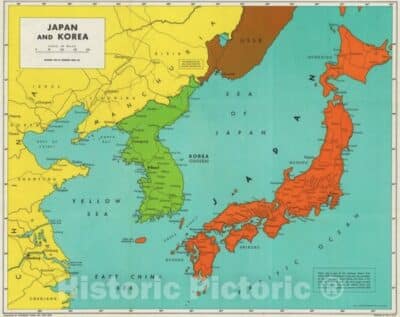
This is a sample historical map that I shared with my production editor, showing the region where my novel takes place. It will highlight significant cities and places of interest that appear in my book. I hope this piques your interest.
Upcoming Events
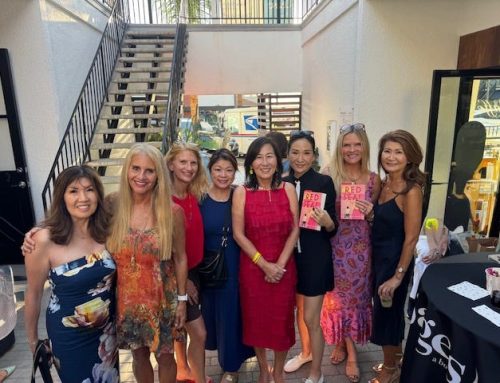
My Palm Springs book club talk was a lot of fun! A group of sustainers from the Coachella Valley Chapter of National Charity League—a group that my daughter and I were involved in here locally—invited me to discuss WHITE MULBERRY. We had a lovely conversation about writing a story based on real people, and several members commented that they saw their own family experiences reflected in my novel. It brings me so much joy to know that my book touches readers in this personal way. I received a lovely orchid, and a generous gift certificate too!
They promised to invite me back for RED SEAL. I can’t wait!

I’ll be in NYC by the time you’re reading this newsletter. That is, if I avoid the winter storm! I’ll be visiting my daughter, attending another private book event in Manhattan, and then heading to Baltimore where I will be on a panel to talk about publishing your debut book. Please join me if you’re at AWP!

Check out all my upcoming events on my Events Page. I’ll be at the Redondo Beach Library on April 4th, so please stop by if you’re in the area. There will be Korean food!
Do you celebrate Lunar New Year? What are your family traditions around the new year?
Please comment below or email me and let me know! I always love hearing from you. Thank you for following along!
What I’m Reading, Watching, Listening To
Nothing to Envy by BarbaraDemick
In this landmark addition to the literature of totalitarianism, award-winning journalist Barbara Demick follows the lives of six North Korean citizens over fifteen years—a chaotic period that saw the death of Kim Il-sung, the rise to power of his son Kim Jong-il (the father of Kim Jong-un), and a devastating famine that killed one-fifth of the population.
 The Knight of the Seven Kingdomson HBO Max
Taking place nearly a century before the events of A Game of Thrones, A Knight of the Seven Kingdoms compiles the three official prequel novellas to George R. R. Martin’s ongoing masterwork, A Song of Ice and Fire.

In 1950s Tehran, seven-year-old Ellie lives in grand comfort until the untimely death of her father, forcing Ellie and her mother to move to a tiny home downtown. Lonely and bearing the brunt of her mother’s endless grievances, Ellie dreams for a friend to alleviate her isolation.
Luckily, on the first day of school, she meets Homa, a kind girl with a brave and irrepressible spirit. Together, the two girls play games, learn to cook in the stone kitchen of Homa’s warm home, wander through the colorful stalls of the Grand Bazaar, and share their ambitions of becoming “lion women.”
But their happiness is disrupted when Ellie and her mother are afforded the opportunity to return to their previous bourgeois life. Now a popular student at the best girls’ high school in Iran, Ellie’s memories of Homa begin to fade. Years later, however, her sudden reappearance in Ellie’s privileged world alters the course of both of their lives.
Together, the two young women come of age and pursue their own goals for meaningful futures. But as the political turmoil in Iran builds to a breaking point, one earth-shattering betrayal will have enormous consequences.


Leave A Comment